
Tim Curry: The actor who made the unusual unforgettable
From Rocky Horror to Pennywise and the stage, Tim Curry built a career on wit, risk and unforgettable...

 18°C
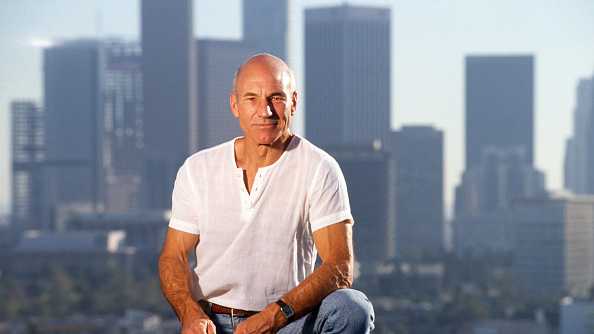
For generations of audiences, Sir Patrick Stewart was more than an actor. He was the commanding voice of Captain Jean-Luc Picard, the compassionate wisdom of Professor Charles Xavier and a master of Shakespeare whose performances captivated theatre audiences long before Hollywood came calling. His extraordinary journey from a working-class childhood in Yorkshire to international recognition was a testament to perseverance, discipline and a lifelong devotion to storytelling.
The celebrated British actor died on 28 October 2026 at his home in Los Angeles, aged 86, following a period with Alzheimer's disease and Lewy body dementia. His passing brought an outpouring of affection from fellow performers and audiences around the world, marking the loss of one of the most respected figures in contemporary entertainment.
Across more than six decades, Stewart built a career that crossed generations, genres and continents. Yet behind his familiar screen presence was a deeply personal story of hardship, determination, friendship and a belief in the transformative power of the arts.
From Yorkshire beginnings to the theatre
Patrick Stewart was born on 13 July 1940 in Mirfield, West Yorkshire, England. His mother, Gladys, worked in the textile industry, while his father, Alfred, was a soldier who later undertook various civilian jobs. Growing up in a modest household, Stewart experienced financial hardship and a difficult family environment that would influence his understanding of human behaviour and suffering.
His childhood was marked by domestic violence, an experience he would speak about publicly many years later. Rather than allowing those early experiences to define his future, Stewart found an important refuge in education, literature and performance.
A schoolteacher, Cecil Dormand, recognised his potential and encouraged his interest in drama. Stewart began performing as a young boy, discovering the extraordinary possibilities of expressing himself through another person's words. The plays of William Shakespeare would become particularly important to him, introducing a world of language, emotion and imagination that reached far beyond his surroundings.
After leaving school, Stewart briefly worked as a journalist while pursuing amateur theatre. His commitment to acting eventually earned him a place at the Bristol Old Vic Theatre School, where he developed the classical training that became the foundation of his distinguished career.
For a young man from Yorkshire, the opportunity represented far more than professional advancement. It opened a door into a world that had once seemed inaccessible.
A Shakespearean actor of exceptional distinction
Long before international audiences knew him as a starship captain, Stewart had established himself as a formidable presence on the British stage.
He joined the Royal Shakespeare Company in 1969 and spent approximately 14 years as a member of the prestigious ensemble, performing in numerous productions of Shakespeare and other classical works. His experience encompassed an impressive range of characters, from commanding rulers and complex villains to deeply conflicted men confronting questions of loyalty, ambition and mortality.
Among his many theatrical achievements were performances in productions of Hamlet, Macbeth, The Tempest and other major works. His distinctive voice, measured delivery and ability to express powerful emotion through seemingly effortless restraint became defining elements of his craft.
Stewart's attachment to theatre never disappeared, even as television and film brought him worldwide fame. He continued returning to the stage throughout his career, demonstrating that his love of acting extended well beyond commercial success.
His acclaimed theatrical work also brought him together with fellow British actor Sir Ian McKellen. Their friendship would become one of the entertainment industry's most cherished relationships, combining artistic admiration with affection, humour and mutual support.
Together, they appeared in productions including Waiting for Godot and No Man's Land, displaying the kind of chemistry that can only emerge from performers with an extraordinary understanding of their craft.
The captain who changed television science fiction
In 1987, Stewart accepted the role that would transform his career and introduce him to millions of households around the world.
At the age of 47, he was cast as Captain Jean-Luc Picard in Star Trek: The Next Generation. The decision represented a significant turning point for an actor whose professional identity had been built around classical theatre.
Initially, Stewart approached the opportunity with uncertainty. The television series was an ambitious continuation of the Star Trek universe, and its long-term success was far from guaranteed.
What followed was a defining chapter in television history.
Running from 1987 until 1994, Star Trek: The Next Generation introduced audiences to a new crew aboard the USS Enterprise. At its centre was Picard, a leader whose authority came not from aggression or bravado, but from intelligence, moral conviction, compassion and an unwavering sense of responsibility.
Stewart's classical training gave the character a remarkable depth. His ability to communicate difficult decisions through controlled emotion and thoughtful dialogue helped transform Picard into an enduring symbol of principled leadership.
For many viewers, the character represented an ideal of what humanity might become: curious, compassionate and willing to confront the unknown without abandoning its values.
The series ran for seven seasons and 178 episodes, eventually leading to four feature films featuring the Next Generation cast. Stewart's portrayal became so closely associated with the franchise that his commanding presence helped define an entire era of Star Trek.

Decades later, he returned to the character in Star Trek: Picard, which premiered in 2020 and concluded in 2023. The series explored an older, more reflective version of the beloved captain, allowing Stewart to examine themes of ageing, regret, reconciliation and the enduring importance of friendship.
His return was especially meaningful to longtime fans who had grown older alongside the character.
Beyond Star Trek, Stewart demonstrated that his commanding screen presence could bring depth and credibility to an entirely different cinematic universe.
In 2000, he made his debut as Professor Charles Xavier in X-Men, helping introduce Marvel's mutant superheroes to a new generation of film audiences. As the founder of a school for gifted young mutants, Xavier believed in peaceful coexistence between humans and mutants, even when confronted by fear, prejudice and hostility.
Stewart brought dignity and emotional intelligence to the role, creating a character whose greatest strength was not his extraordinary telepathic ability, but his compassion and faith in others.
His on-screen relationship with Ian McKellen, who portrayed Xavier's ideological rival Magneto, became one of the franchise's most compelling elements. The characters frequently found themselves on opposing sides, yet shared a complicated friendship shaped by history, mutual respect and fundamentally different views of the world.
Stewart reprised Xavier across multiple films, including X2, X-Men: The Last Stand, X-Men: Days of Future Past and Logan. His performance in Logan, released in 2017, offered a particularly moving interpretation of the character, exploring vulnerability, declining health and the profound emotional bonds formed over a lifetime.
For Stewart, the role of Xavier became another defining achievement, demonstrating his ability to bring humanity and sophistication to popular entertainment without diminishing its excitement or imagination.
His cinematic achievements extended beyond these two celebrated franchises. Earlier appearances included Excalibur and David Lynch's Dune, while his later screen work ranged from dramatic performances to comedy and voice acting.
He also became familiar to television audiences through his distinctive voice work, including his portrayal of Avery Bullock in the animated series American Dad! His willingness to embrace humour and occasionally poke fun at his own distinguished reputation revealed a playful side that delighted audiences.
Throughout his career, Stewart resisted being confined to a single genre. Whether portraying a Shakespearean monarch, a futuristic commander or an animated character, he approached each role with commitment and curiosity.
A lifetime of recognition and achievement
Stewart's contribution to the performing arts earned him an impressive collection of honours. His theatrical performances brought Laurence Olivier Awards, while his work across stage and screen received Emmy and Tony Award nominations.
He also received a Grammy Award for his spoken-word performance of Peter and the Wolf, demonstrating how his distinctive voice could captivate audiences without the visual elements of film or theatre.
In 2001, he was appointed an Officer of the Order of the British Empire, recognising his contribution to acting. Further national recognition followed in 2010 when Queen Elizabeth II knighted him for his services to drama.
For an actor who had grown up in a modest Yorkshire household, the honour represented an extraordinary milestone. His professional journey had taken him from amateur productions and regional theatre to international acclaim and one of Britain's most respected distinctions.
Stewart also maintained strong connections to his home region. He served as Chancellor of the University of Huddersfield from 2004 to 2015, reflecting his commitment to education and the communities that had shaped his earliest years.
His achievements were not simply a matter of awards or recognition. They reflected decades of dedication to a profession in which he continued learning, experimenting and challenging himself long after achieving financial security and fame.
The man behind the commanding voice
Beyond his professional accomplishments, Stewart's personal experiences shaped his work as an advocate for people affected by domestic abuse.
Having witnessed violence against his mother during childhood, he became a prominent supporter of organisations working to protect survivors and improve public understanding of abuse. His willingness to discuss painful family experiences helped draw attention to the long-term consequences of violence within the home.
He also publicly supported initiatives assisting military veterans and people experiencing trauma, connecting his advocacy with his understanding of the difficulties faced by his father following wartime service.
Those experiences gave Stewart an appreciation of the complexity of human lives. Through his public advocacy, he encouraged conversations about compassion, accountability and the importance of seeking help.
His personal life included marriage, fatherhood and enduring friendships. Stewart had two children, Daniel and Sophia, with his first wife, Sheila Falconer.
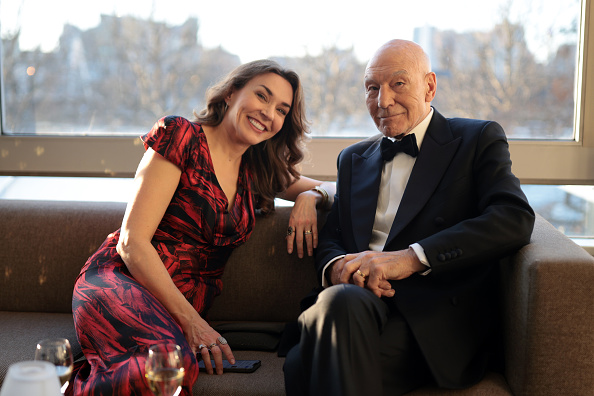
In 2013, he married American singer-songwriter Sunny Ozell in a ceremony officiated by his longtime friend Ian McKellen. Their marriage became an important part of his later life, with the couple frequently appearing together at public events and supporting one another's creative endeavours.
Stewart's friendship with McKellen was particularly beloved by fans. Their affectionate public appearances, shared humour and occasional adventures demonstrated a relationship that extended far beyond professional collaboration.
Although known for portraying serious and authoritative characters, Stewart frequently displayed a mischievous sense of humour in interviews and public appearances. His willingness to laugh at himself offered a contrast to the commanding figures audiences had grown accustomed to watching on screen.
Reflecting on an extraordinary journey
In 2023, Stewart published his memoir, Making It So, offering readers an intimate account of the experiences, relationships and decisions that had shaped his life.
The book traced his journey from childhood hardship to theatrical success and international fame, while also exploring the personal challenges that accompanied his achievements. It offered an opportunity for audiences to understand the man behind some of popular culture's most recognisable characters.
Writing about his early experiences, career ambitions and relationships, Stewart reflected on a life that had unfolded in ways he could scarcely have imagined as a young boy discovering Shakespeare in Yorkshire.
His later years included continued public appearances and a lasting connection with the Star Trek community. For generations of fans, his involvement with the franchise represented something more personal than celebrity admiration. Picard had become a character associated with hope, wisdom and the possibility of a more compassionate future.
Stewart's death on 28 October 2026 followed a period with Alzheimer's disease and Lewy body dementia, conditions that had not previously been publicly disclosed. His family and representatives confirmed that he died at his Los Angeles home surrounded by love and care.
News of his passing prompted tributes from colleagues across theatre, television and film. Among those sharing their sadness were performers who had worked alongside him and considered him a mentor, collaborator and friend.
For Hugh Jackman, who shared the screen with Stewart in the X-Men films, the loss was both professional and personal. Other colleagues celebrated his generosity, remarkable talent and the influence he had on younger generations of performers.
An influence that reaches beyond the screen
Patrick Stewart's extraordinary career cannot be measured by a single role, award or achievement. His life encompassed the discipline of classical theatre, the imagination of science fiction, the emotional complexity of dramatic storytelling and a commitment to causes rooted in his own experiences.
As Jean-Luc Picard, he encouraged audiences to imagine leadership founded on integrity and compassion. As Charles Xavier, he explored the importance of acceptance and understanding. On the Shakespearean stage, he demonstrated the enduring power of language to reveal the complexities of human nature.
Yet the most compelling aspect of his story may be the distance he travelled from his beginnings. A young boy growing up amid hardship discovered a passion that would eventually connect him with millions of people around the world.
His performances will continue to be discovered by new audiences, just as his familiar characters remain important to those who grew up watching them.
Sir Patrick Stewart leaves behind a remarkable body of work and an example of how dedication, curiosity and compassion can shape an extraordinary life.
From the theatres of Britain to the bridge of the Enterprise, his journey was never simply about fame. It was about the stories people tell, the connections they form and the possibilities they discover along the way.
For audiences who found inspiration in his performances, his influence will endure for generations to come.